소렌토 ↔ 포시타노
그간 바빴던 로마 일정과 달리, 소렌토에서의 하루는 쉼표 같은 시간이었습니다. 특별히 서두를 곳도, 반드시 들러야 할 곳도 정해져 있지 않았어요.
숙소에서 아침을 먹고, 포시타노행 버스를 타기 위해 소렌토역으로 향했어요. 시타(SITA) 버스 편도 티켓은 2.4유로, 두 명 왕복 기준 총 9.6유로에 표를 끊었습니다. 9시 15분 버스를 타려 했는데, 이미 자리가 꽉 차 있더라고요. 서서 가거나 다음 차를 기다리라는 얘기에, 한 타임 뒤로 미루기로 했어요.
이왕 늦게 가게 된 김에 마트에 들러 점심을 미리 사기로 했어요. 포시타노 물가가 꽤 높다는 이야기를 들었거든요. 오전에는 날씨도 흐려서, 어차피 사진이 잘 나올 상황은 아니었고 — 차라리 식비를 아끼는 게 나을 거라 판단했습니다. 마트에서 이미 조리된 닭 요리를 5유로에, 모듬 과일을 4유로에 사서 버스에 올랐어요.
절벽 위의 청룡열차
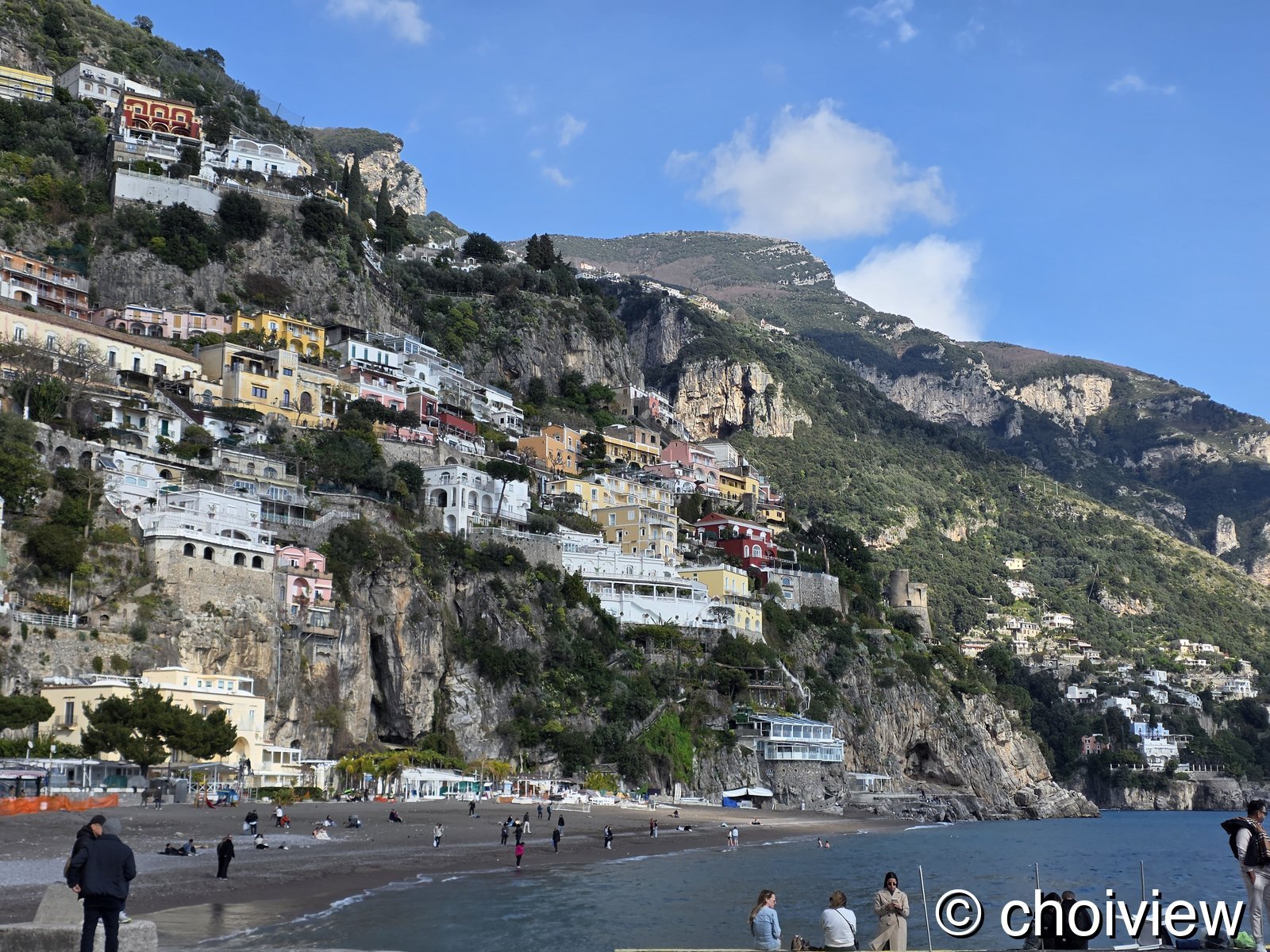
포시타노로 가는 길은 절벽 위를 달리는 S자 커브의 연속이었습니다. 마치 놀이공원 청룡열차를 타는 것 같았어요. 여태껏 타본 길 중 가장 어지러웠는데, 그만큼 눈을 뗄 수가 없었습니다. 절벽 아래로 펼쳐진 푸른 바다, 돌산 사이에 아슬아슬하게 들어선 집들 — 멀미가 올 것 같으면서도 자꾸 창밖을 보게 되더라고요.
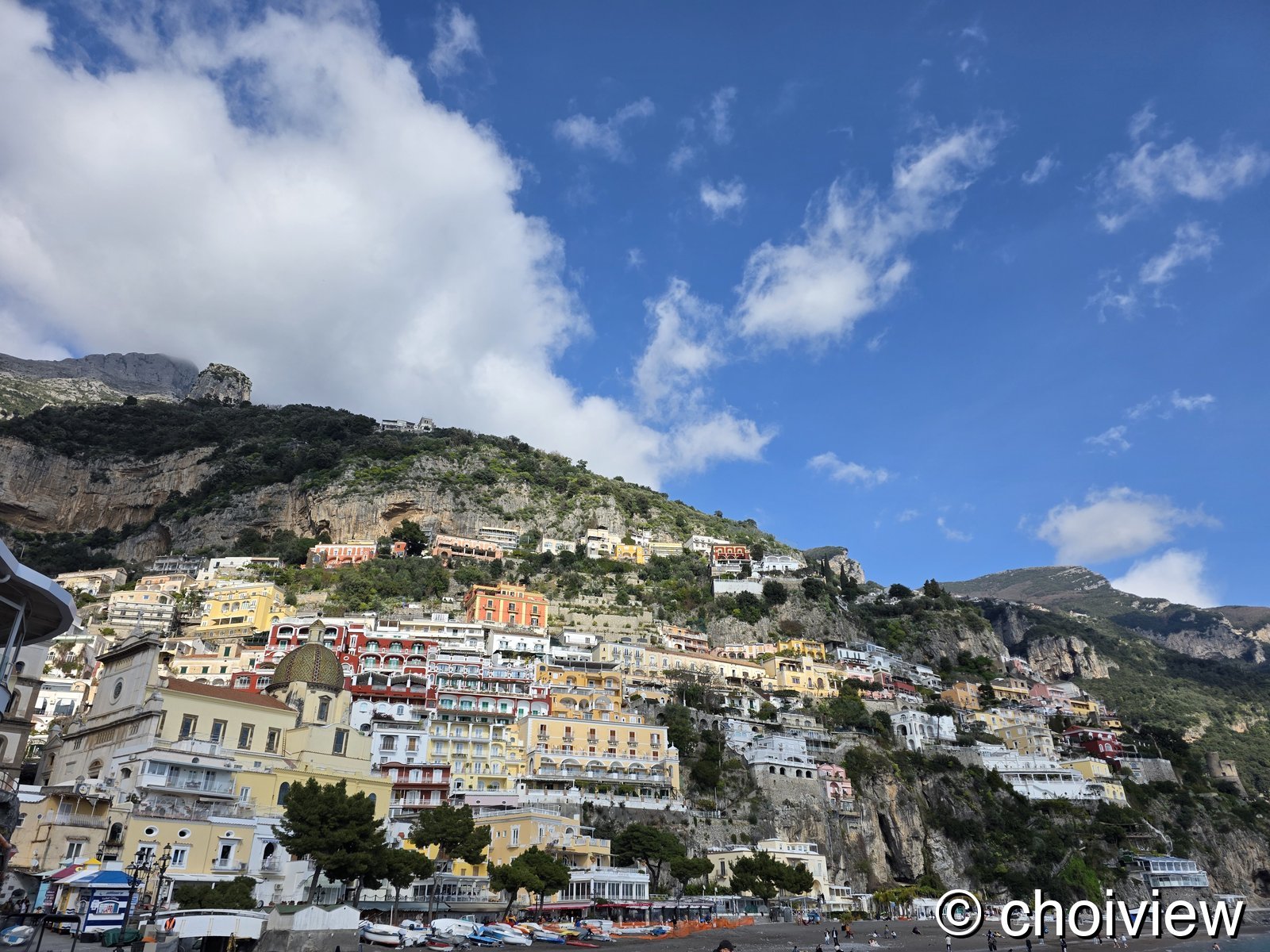
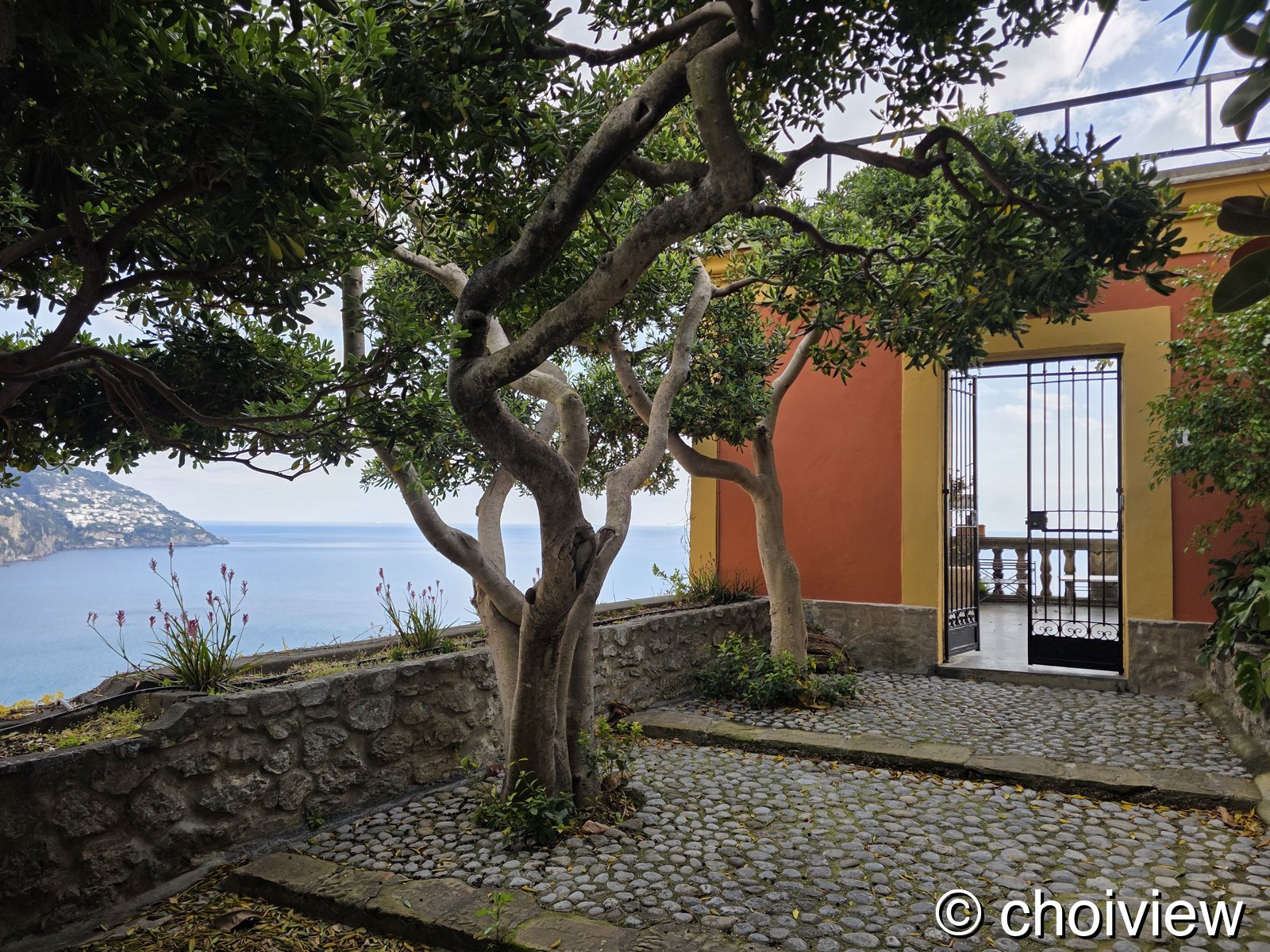
포시타노에 가까워질수록 남해 다랭이 마을을 떠올리게 하는 계단식 구조가 나타났어요. 드넓은 바다와 돌산 위의 알록달록한 집들이 어우러진 풍경은, 그 자체로 한 폭의 그림 같았습니다.
어떻게 저런 절벽에 집을 짓고 살까, 불편하진 않을까, 위험하진 않을까 — 비탈면 위에서 삶을 이어가는 사람들이 참 대단해 보였어요.
포시타노의 역사 — 생존이 만든 절경
사라센 해적의 위협이 잦았던 이 해안 지형 위에, 오랜 세월 삶이 축적되며 지금의 수직적인 마을이 형성됐습니다. 포시타노에는 로마 시대까지 거슬러 올라가는 정착 흔적이 남아 있고, 중세에는 아말피 공화국의 영향권 아래 지중해 무역의 거점 중 하나로 번영했어요. 해상 무역과 지역 상업이 이루어졌고, 단순한 어촌을 넘어 항구 마을로 성장했습니다. 하지만 아말피 공화국이 쇠퇴하면서 포시타노도 서서히 기능을 잃었고, 이후 수 세기 동안 경제적으로 침체된 작은 어촌으로 남아 있었어요.
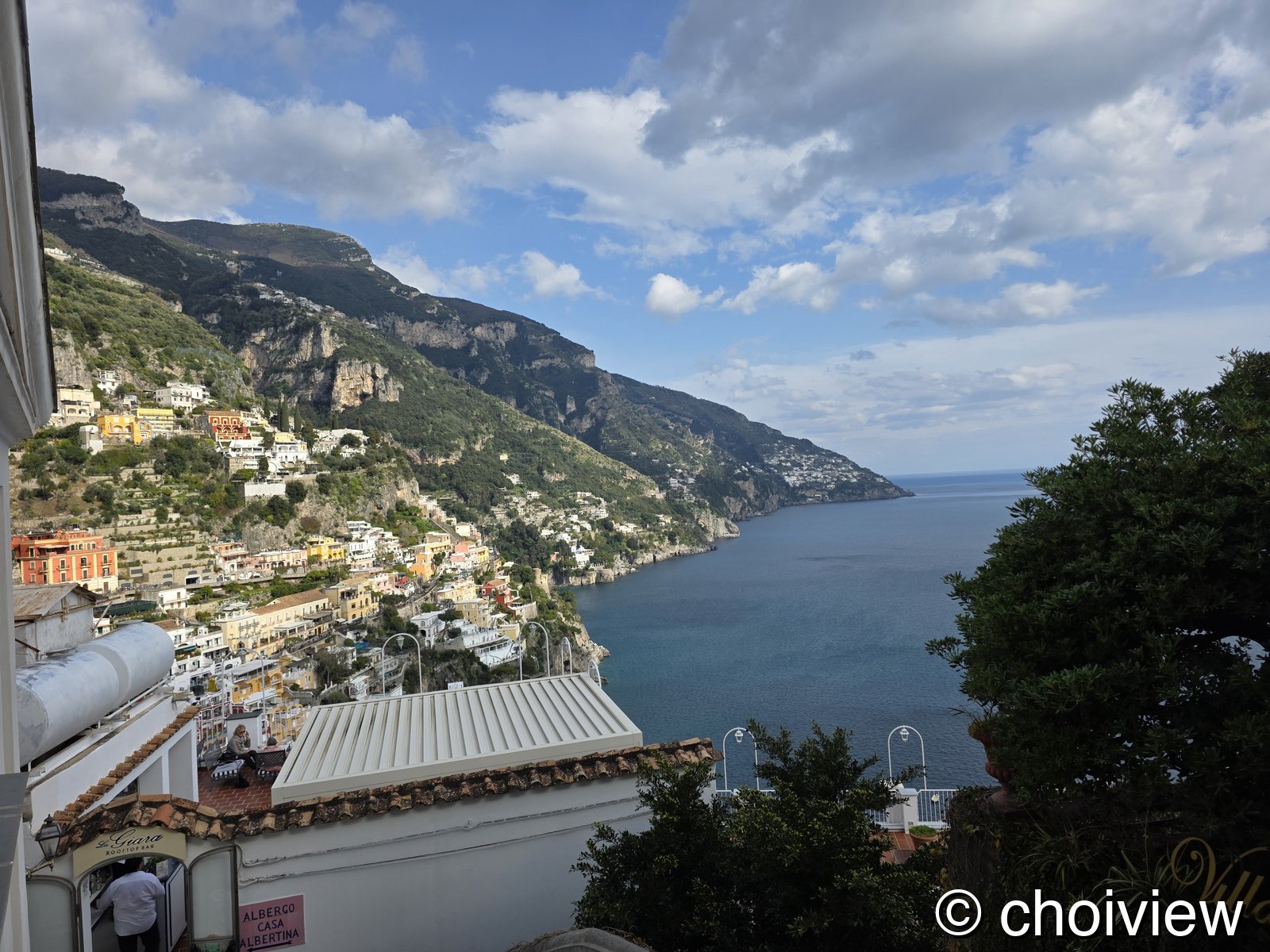
1950년대 이후 포시타노는 관광지로 널리 알려지기 시작했습니다. 미국 작가 존 스타인벡이 1953년 Harper’s Bazaar에 기고한 “Positano bites deep…”이라는 글도 그 이미지 형성에 한몫했어요. 가파른 지형과 계단식 구조가 오히려 이국적인 매력으로 인식되면서, 유럽과 미국의 예술가와 여행자들이 이곳을 찾기 시작했고 — 시간이 흐르며 지금의 포시타노다운 풍경이 만들어졌습니다.
결국 포시타노는 절벽이라는 지리적 조건, 해적을 피하려는 방어적 선택, 중세 해상 무역의 흥망, 그리고 현대 관광 산업의 발전이 겹겹이 쌓여 만들어진 마을이에요. 계획된 도시가 아니라, 생존과 쇠퇴와 재탄생의 시간이 축적된 곳이라고 할 수 있습니다.
흐린 하늘 아래의 포시타노
예정보다 늦게 도착했는데도 날씨는 여전히 흐리고 쌀쌀했어요. 해안까지 내려가서, 미리 사온 점심을 꺼내 먹었습니다. 시간이 지나면서 하늘이 조금씩 개기 시작하더라고요. 이리저리 사진과 영상을 찍으며 포시타노의 절경에 빠져들었어요.
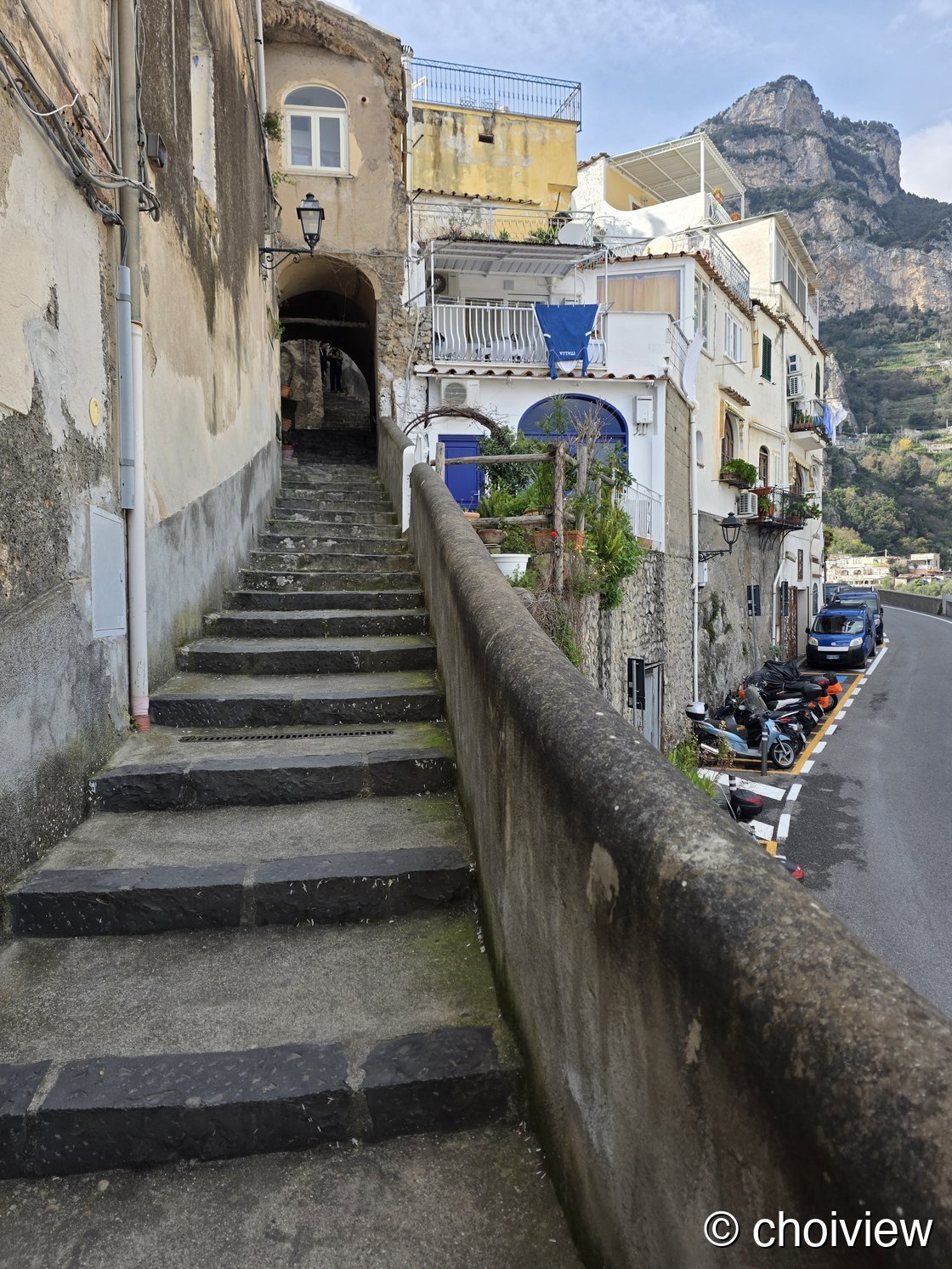
돌아가는 버스 시간이 다가오자 서둘러야 했습니다. 늦으면 서서 가거나 한 시간을 더 기다려야 한다는 얘기에, 오후 3시 25분 버스를 목표로 잡았어요. 해안까지 내려갈 때는 비교적 편한 길이었는데, 정류장으로 올라가는 길은 완전히 달랐습니다. 다른 경로로 가보자고 해서 경사가 심한 길을 택했는데 — 이건 거의 등산 수준이었어요. 땀을 흘리며 정류장에 도착하니, 다행히 버스가 예정보다 3분 일찍 와 있더라고요. 몇 남지 않은 빈자리에 앉아 편하게 돌아올 수 있었습니다.
소렌토에서 보는 베수비오
4시 반쯤 소렌토에 도착해, 어제 제대로 보지 못했던 해안 풍경을 찾아갔어요. 어제는 보이지 않았던 바다 건너 베수비오 화산이 또렷이 눈에 들어왔습니다. 그 아래 어딘가에 폼페이가 있었다는 사실도 함께 떠올랐어요.
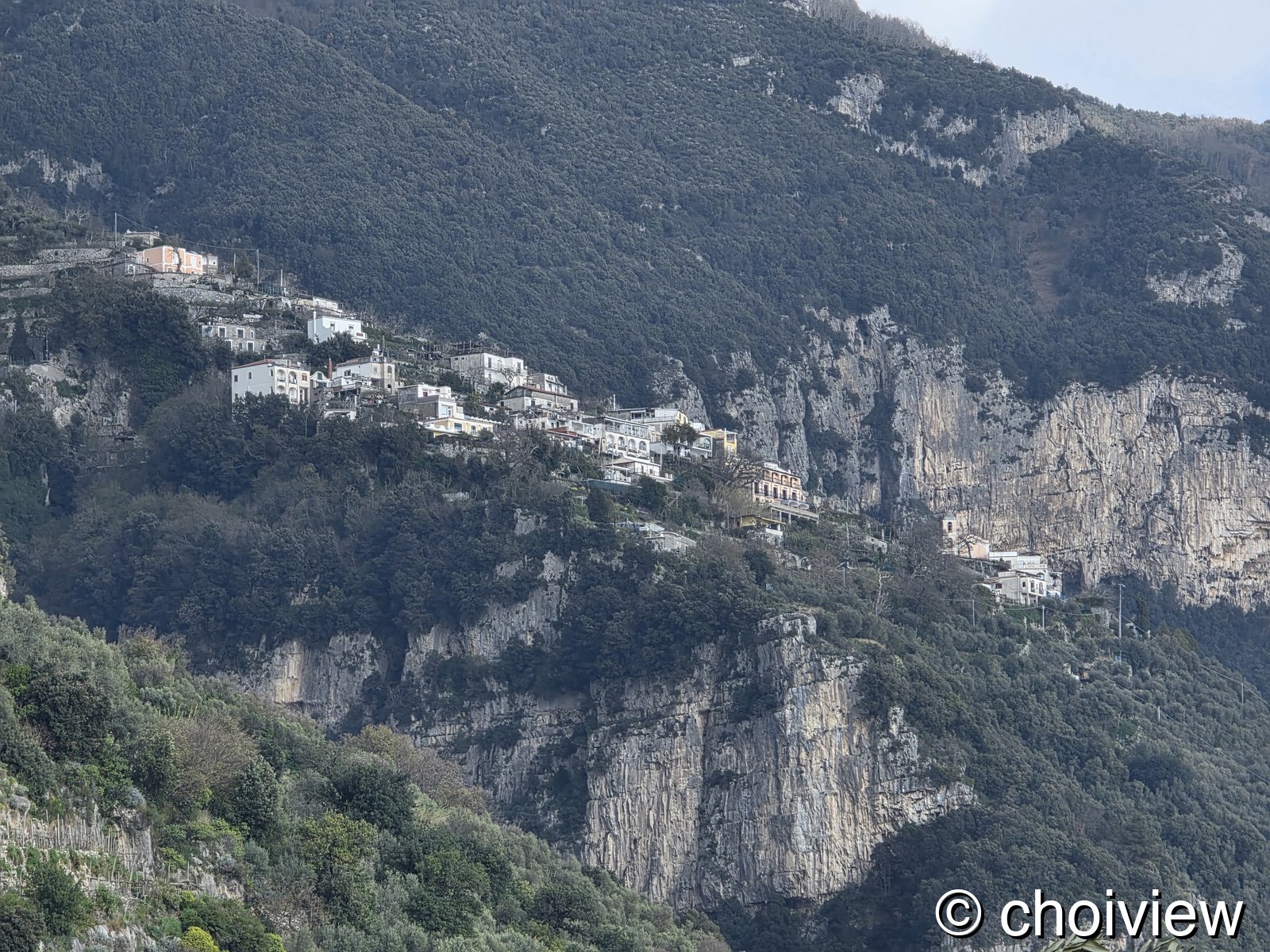
자연재해 앞에 한순간에 무너질 수도 있는 게 사람 사는 일인데, 아둥바둥 사는 게 참 부질없다는 생각도 잠깐 스쳤습니다. 물론 그런 생각은 오래가지 않았어요. 눈앞의 풍경이 너무 좋았으니까요.
하루의 끝
해가 떨어지고 바닷바람이 매서워지자 숙소로 돌아왔어요. 어제와 같이 저녁을 해 먹고 하루를 정리했습니다. 내일은 경유하듯 지나왔던 나폴리로 다시 가는 날이에요. 짐을 미리 싸야 했는데 너무 졸려서, 아침에 일찍 일어나 준비하기로 마음먹고 하루를 마무리했어요.
📍 오늘 만난 장소들
- 소렌토 (Sorrento) — 나폴리 만의 아름다운 항구 도시이자 포시타노로 가는 거점
- 포시타노 (Positano) — 절벽 위에 지어진 알록달록한 파스텔톤의 이국적인 해안 마을
✏️ 끄적끄적 노트
자연재해 앞에 한순간에 무너질 수도 있는 게 사람 사는 일인데, 아등바등 사는 게 참 부질없다는 생각도 잠깐 스쳤습니다. 물론 눈앞의 풍경이 너무 좋아서 그런 상념도 오래가진 않았지만요.
✈️ 여행 팁
- ✓ 소렌토에서 포시타노로 가는 SITA 버스는 편도 약 2.4유로이며, 소렌토역에서 구매할 수 있습니다.
- ✓ 포시타노는 물가가 높은 편이므로 미리 마트에서 간단한 식사를 준비해 가면 경비를 절약할 수 있어요.
- ✓ 절벽을 따라 달리는 S자 커브 길이 험하므로 멀미약 등 대비가 필요할 수 있습니다.
- ✓ 버스 좌석이 금방 차니 여유 있게 정류장에 도착하는 것이 좋습니다.
Sorrento ↔ Positano
Unlike our hectic days in Rome, our day in Sorrento felt like a quiet pause in the middle of the trip. There was nowhere we had to rush to, nothing we absolutely had to see.
After breakfast at our accommodation, we headed to Sorrento Station to catch the bus to Positano. A one-way SITA bus ticket cost 2.40 euros; for two people round-trip, we paid a total of 9.60 euros. We’d planned to take the 9:15 bus, but it was already packed. We were told we could either stand or wait for the next one, so we decided to take the next bus.
Since we were leaving later anyway, we stopped by a supermarket to pick up lunch ahead of time. We’d heard Positano’s prices were steep. The morning sky was overcast too, so it wasn’t exactly ideal for photos — we figured it made more sense to save on food. We grabbed a pre-cooked chicken dish for 5 euros and an assorted fruit pack for 4 euros, then boarded the bus.
The Roller Coaster on the Cliffs
The road to Positano twisted along the cliffs in a series of sharp S-curves. It felt like riding a roller coaster. I was more motion-sick than I’d ever been, and still, I couldn’t look away. The deep blue sea unfolding beneath the cliffs, the houses perched precariously between the rocky slopes — I kept pressing my face to the window even as the nausea crept in.
As we drew closer to Positano, the terraced village structure reminded me of Daraengi Village back in Korea’s Namhae. The wide-open sea and the colorful houses dotting the rocky hillside — it looked like a painting come to life.
I kept wondering how people managed to build homes on cliffs like that — how they lived there at all, with the steepness and the risk. I couldn’t help but admire their resilience.
The History of Positano
The vertical village we see today was shaped over centuries on a coastline long troubled by Saracen pirate raids. Positano bears traces of settlement dating back to Roman times, and during the Middle Ages, it thrived as a key Mediterranean trading hub under the Amalfi Republic. As maritime trade and local commerce flourished, Positano grew from a small fishing village into a lively port town. But as the Amalfi Republic declined, Positano too lost its importance and settled into a long period of quiet decline as a small fishing village.
From the 1950s onward, Positano gained widespread recognition as a tourist destination. American author John Steinbeck’s 1953 essay in Harper’s Bazaar played a part in shaping its allure. The steep terrain and terraced architecture came to be seen as exotic charm, drawing artists and travelers from across Europe and America. Over time, the image of Positano we know today gradually took shape.
Ultimately, Positano is a village shaped by layers — the geographical constraint of its cliffs, the defensive choices made to evade pirates, the rise and fall of medieval maritime trade, and the growth of modern tourism. It was never a planned city. It’s a place where the traces of survival, decline, and rebirth have built up over centuries.
Positano Under Gray Skies
Even though we arrived later than planned, the weather was still gray and chilly. We walked down to the shore and unpacked the lunch we’d bought earlier. As time passed, the sky began to clear little by little. We lost ourselves in Positano’s stunning scenery, stopping here and there to take photos and shoot videos.
As the departure time for our return bus approached, we had to hurry. Missing it meant either standing the whole way or waiting another hour, so we aimed for the 3:25 PM bus. The walk down to the coast had been relatively easy, but the climb back up to the bus stop was a different story entirely. We decided to try a different route and chose a steeper path — which turned out to be far more strenuous than we expected. Sweating through the climb, we arrived at the stop just in time. Thankfully, the bus had arrived three minutes early, and we snagged some of the last remaining seats for a comfortable ride back.
Vesuvius from Sorrento
We got back to Sorrento around 4:30 and went looking for the coastal views we hadn’t properly seen the day before. This time, Mount Vesuvius across the bay was clearly visible — something we’d completely missed yesterday. It struck me that somewhere beneath it lay Pompeii.
A natural disaster can undo a life in an instant — the thought crossed my mind that all our striving can seem rather futile. Still, the thought passed quickly. The view before me was simply too beautiful.
End of the Day
As the sun set and the sea breeze turned biting, we headed back to our accommodation. We cooked dinner just as we had the night before and wrapped up the day. Tomorrow, we’d be returning to Naples — the city we’d only passed through on our way down. I should’ve packed beforehand, but I was too drowsy, so I told myself I’d wake up early and get it done in the morning.