뮌헨에서 취리히로, 국경을 넘다
5시에 기상해서 6시 15분 출발인 플릭스버스를 타기 위해 부지런히 움직였습니다.
준비하고 나와 보니 6시, 15분 만에 정류장까지 이동해야 하는 상황이었어요. 다행히 6시 12분에 탑승! 검표원도 친절했고 짐 실어주는 분도 아주 다정하더라고요. 플릭스버스는 연착이나 지연 출발이 기본이라던데, 이날은 정확히 6시 15분에 출발했습니다. 직전에 달려오는 사람이 한 명 있었는데, 그 사람까지 태워서 무사히 출발할 수 있었고요.
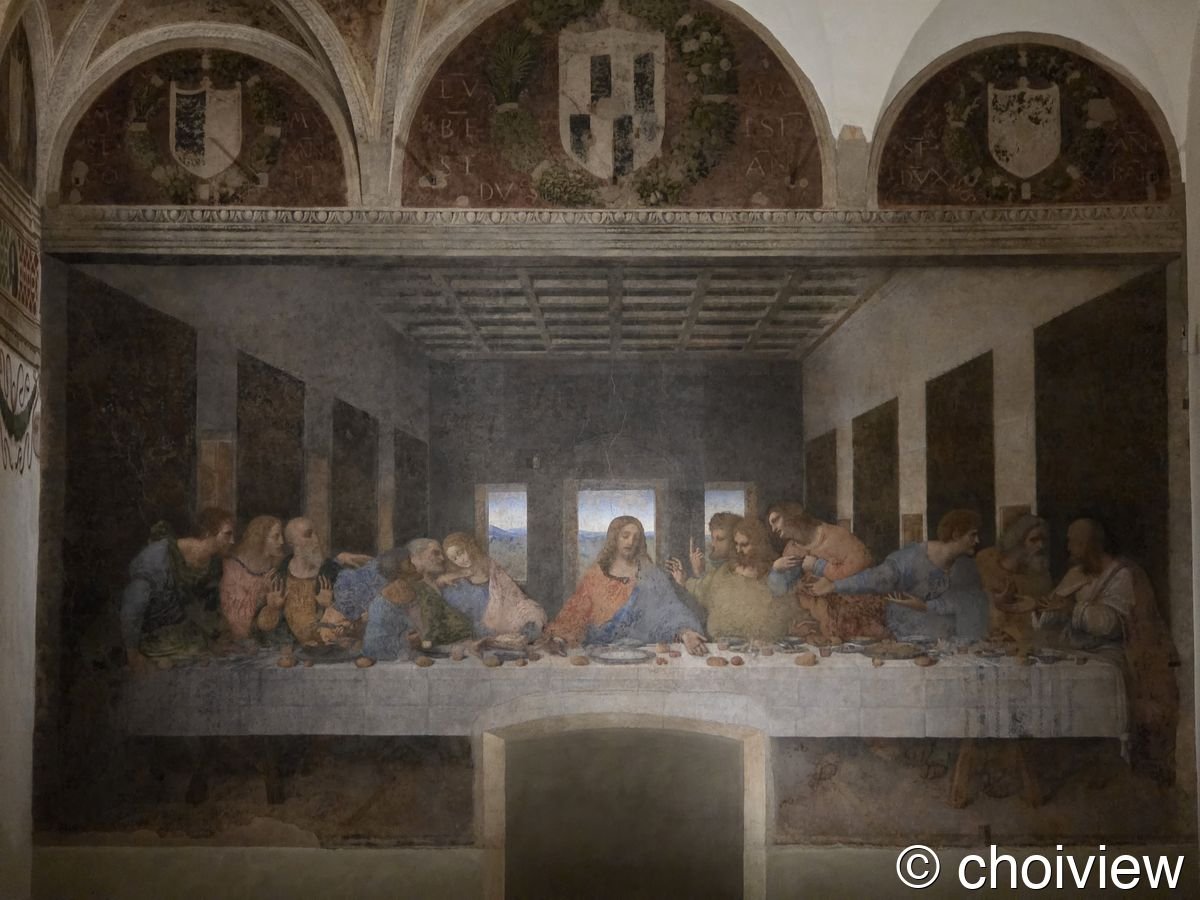
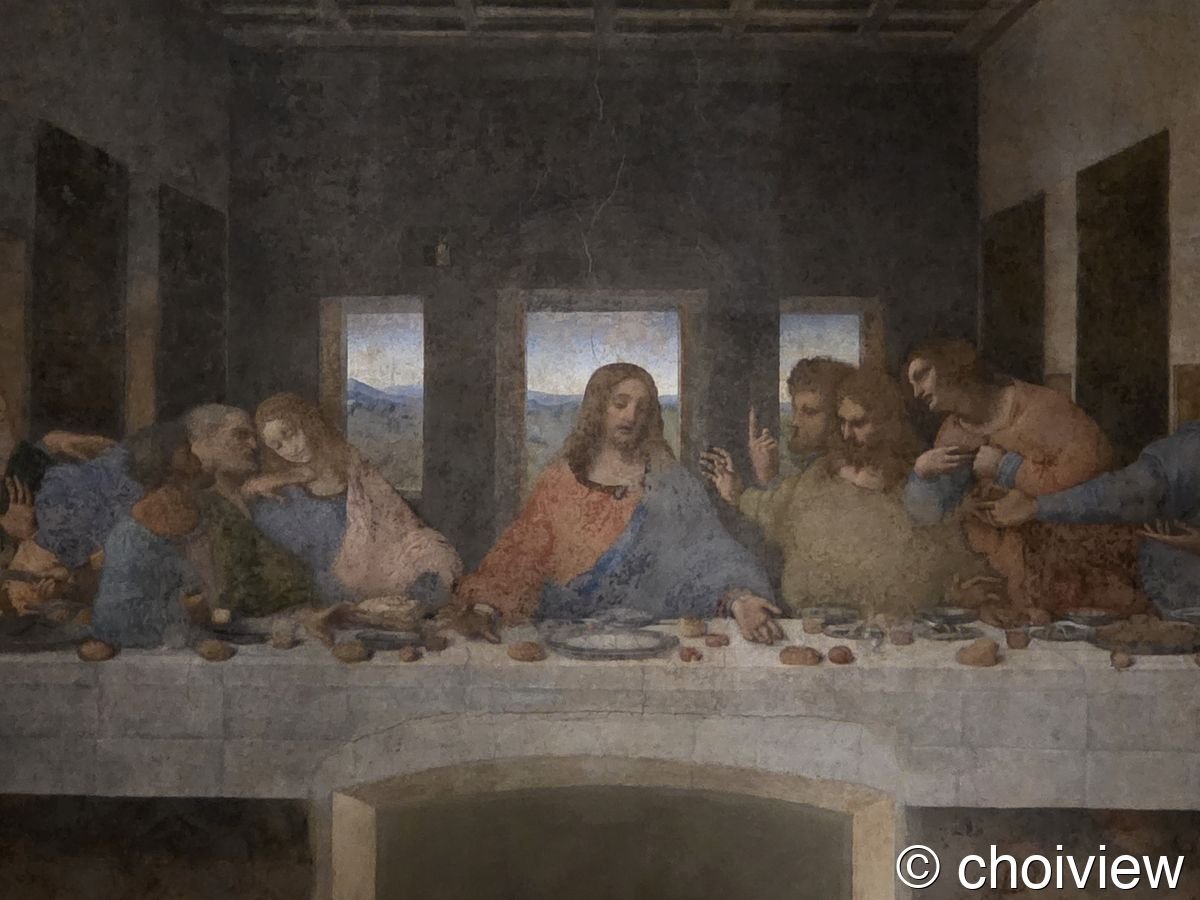
이동하는 길에 뜻밖의 행운이 찾아왔어요. 최후의 만찬을 볼 수 있는 산타 마리아 델레 그라치에 성당의 관람권을 구할 수 있었거든요. 수백 년 된 그림의 물감이 계속 떨어져 나가고 있어서 하루에 35명만 관람 가능한데, 어제까지만 해도 모두 매진 상태였어요. 그런데 3일 전인 오늘 마지막 표가 하나 떠 있더라고요. 여행에서 이런 운이 따라줄 때가 있어요. 안 좋은 날이 있으면 반드시 좋은 날도 와요.
버스 안은 의외로 쾌적했어요. 화장실이 있고 사용 중인지 비어 있는지 표시등으로 알 수 있어 편리했고요. 와이파이도 되지만 250메가 제한이라 영상 보기엔 부족하고, 웹서핑 정도는 문제없었어요.
버스 안 풍경도 재미있었어요. 엄마랑 다른 좌석에 앉은 딸이 음식을 주고받거나 입술 뽀뽀를 하는 모습, 영상 회의를 하는 사람, 그리고 대부분은 기절한 듯 자고 있었는데 그 자는 모양이 가지각색이더라고요.
오스트리아를 거쳐 스위스 취리히까지 장장 4시간, 10시 35분경에 도착했습니다. 우려했던 연착은 생각보다 덜한 셈이었어요.
확실히 국가가 바뀌니 풍경도 바뀌더라고요. 문화와 언어, 종교 — 같은 유럽이라도 모든 게 달랐습니다. 뭔가 더 세련미가 느껴진달까. 사람들도 좀 더 각자의 세계에 몰입해 있는 느낌이었고, 자기 인생을 즐기는 데 여념이 없는 듯 보였어요.
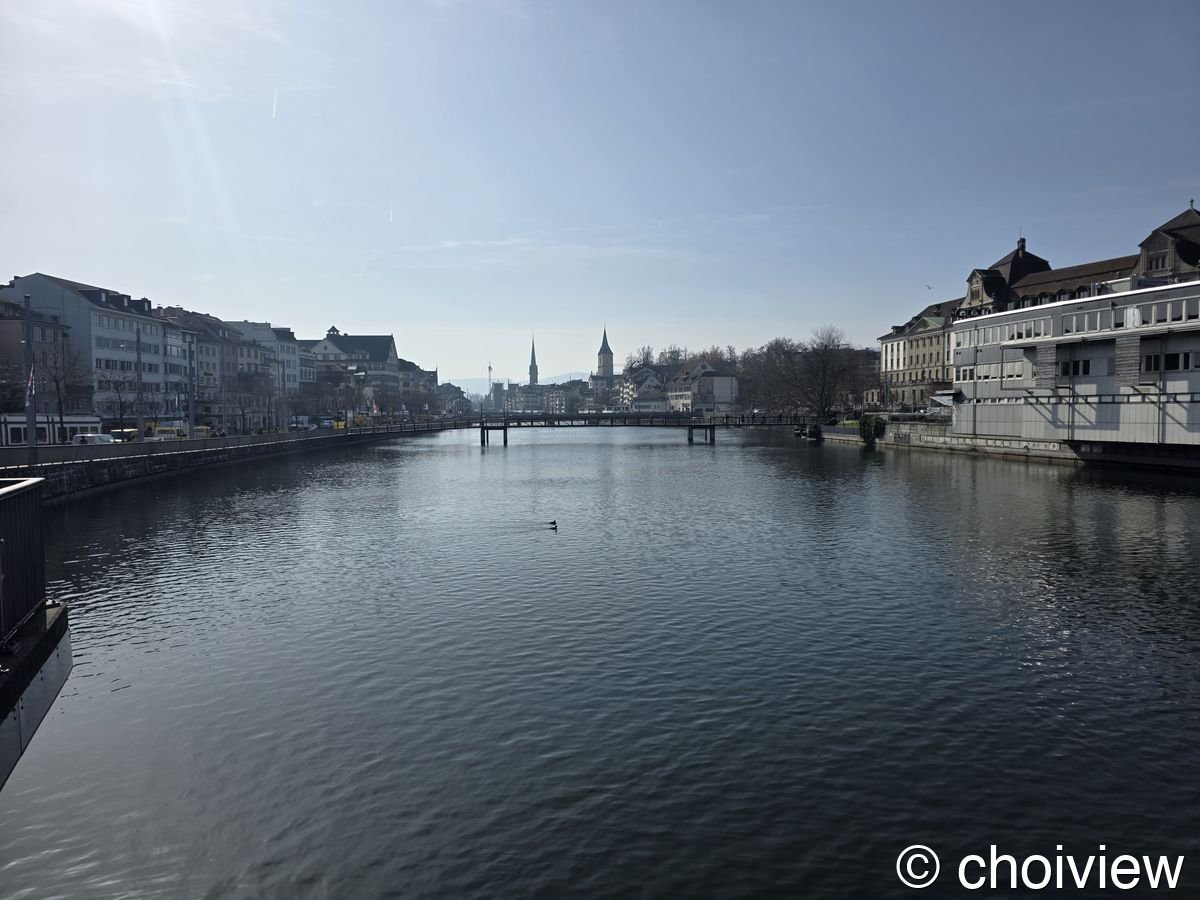
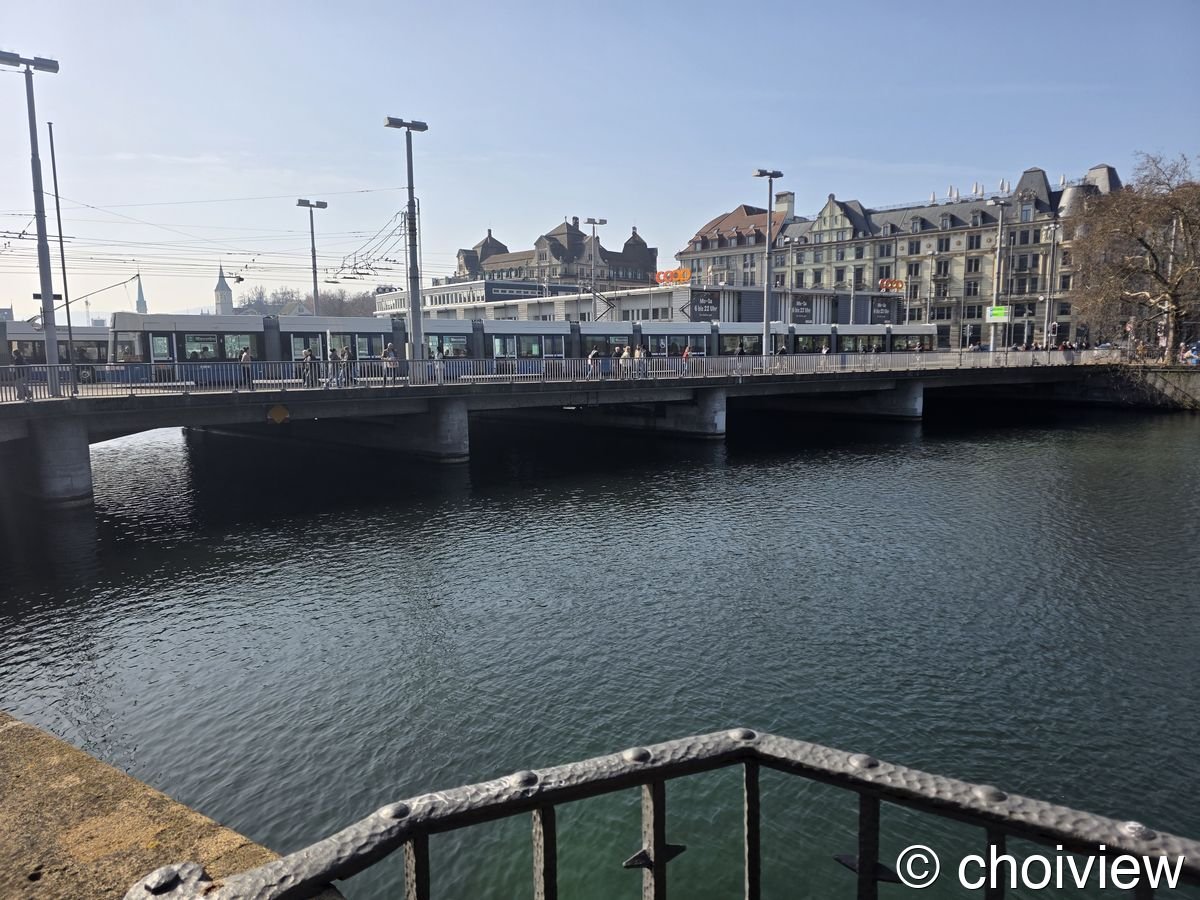
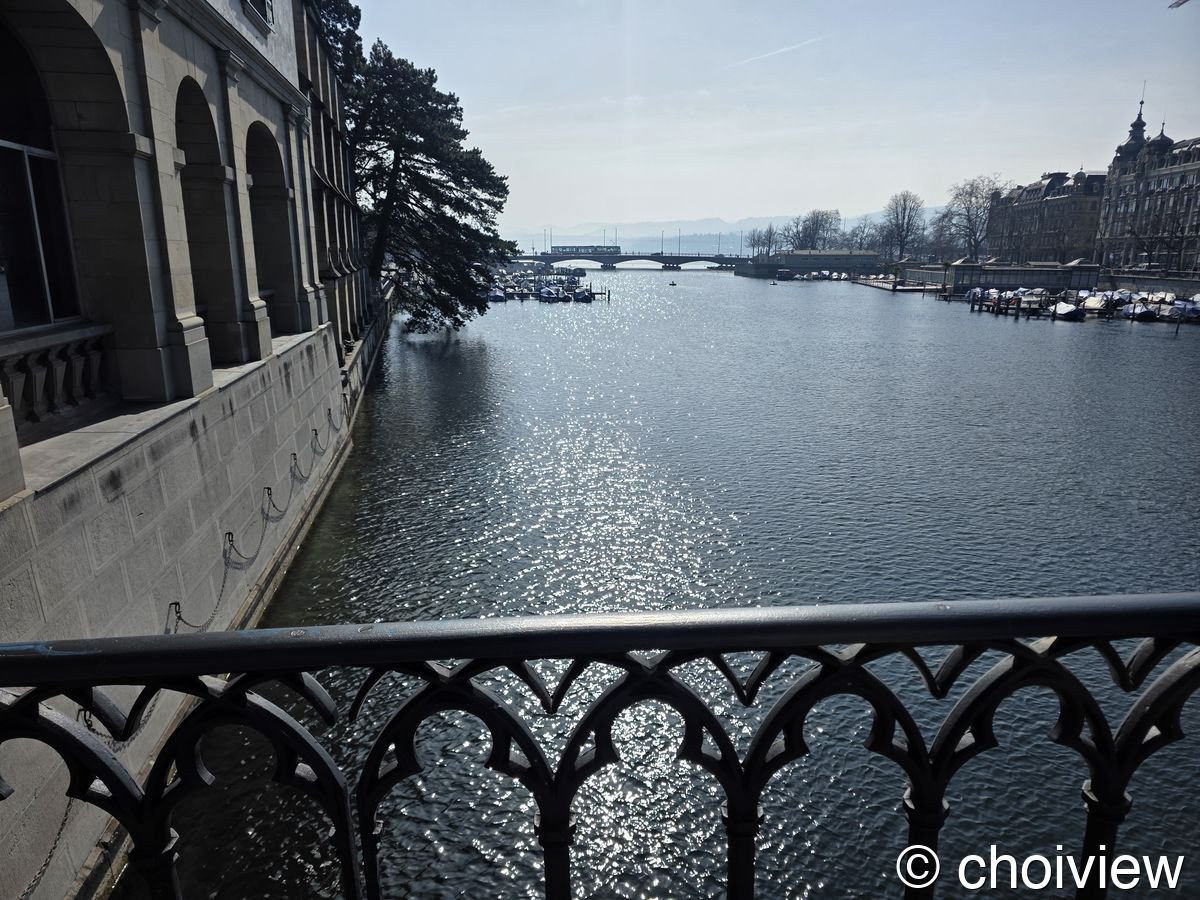
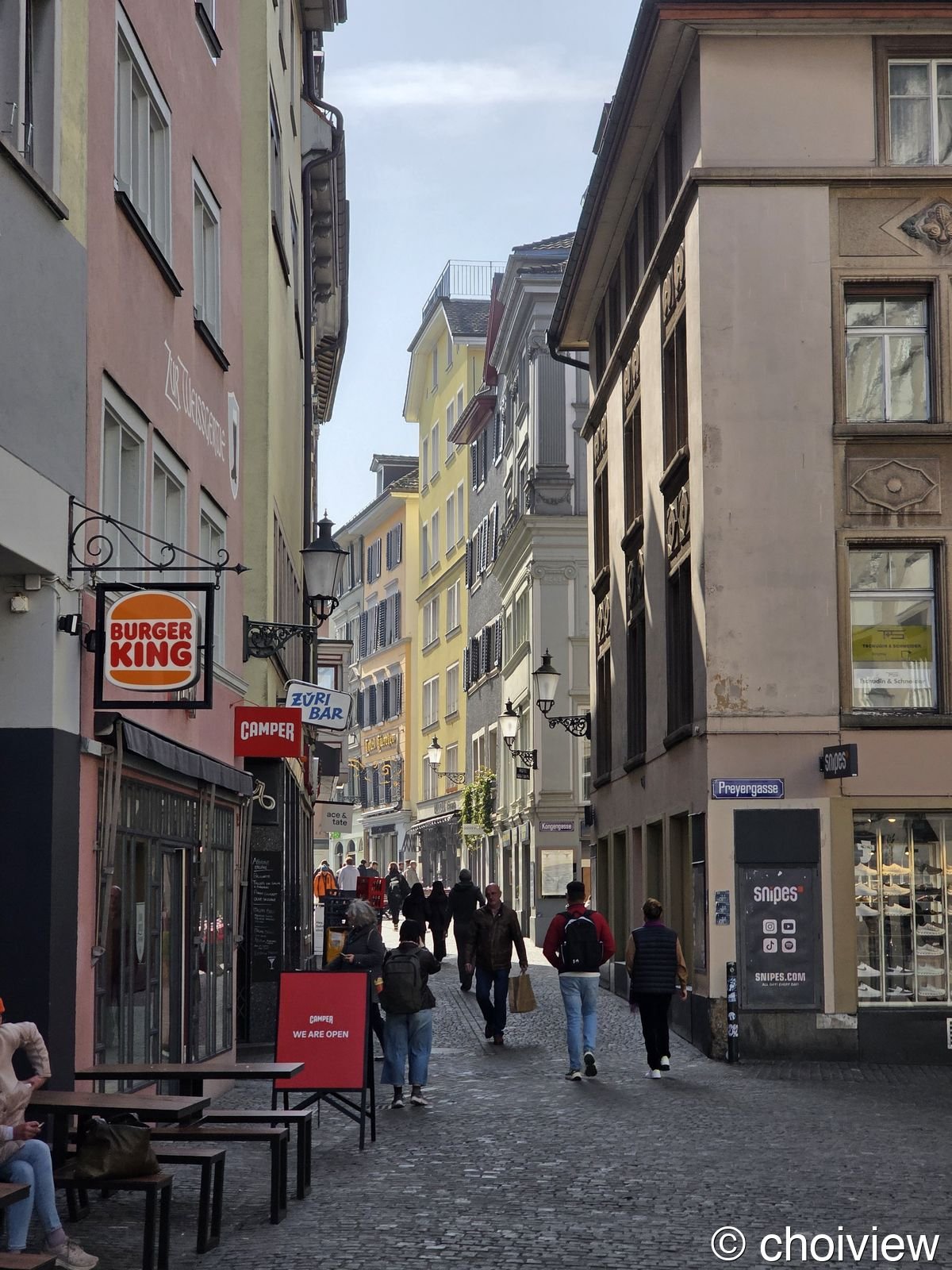
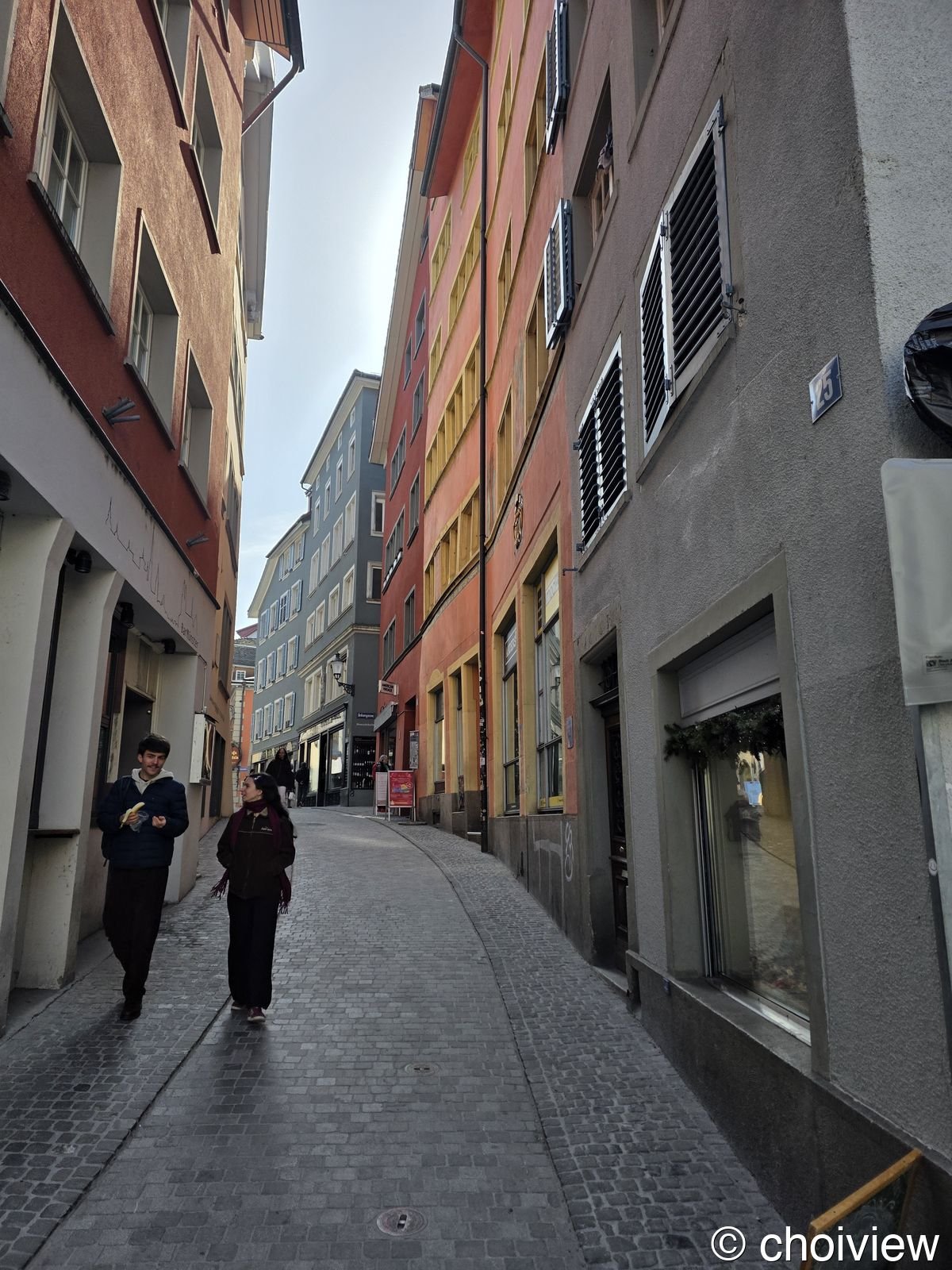
역에서 나와 바로 리마트 강 Limmat을 따라 걸었어요. 활기찬 식당가와 상권이 이어지는 반호프슈트라세 Bahnhofstrasse를 거닐며 취리히의 분위기를 느꼈습니다.
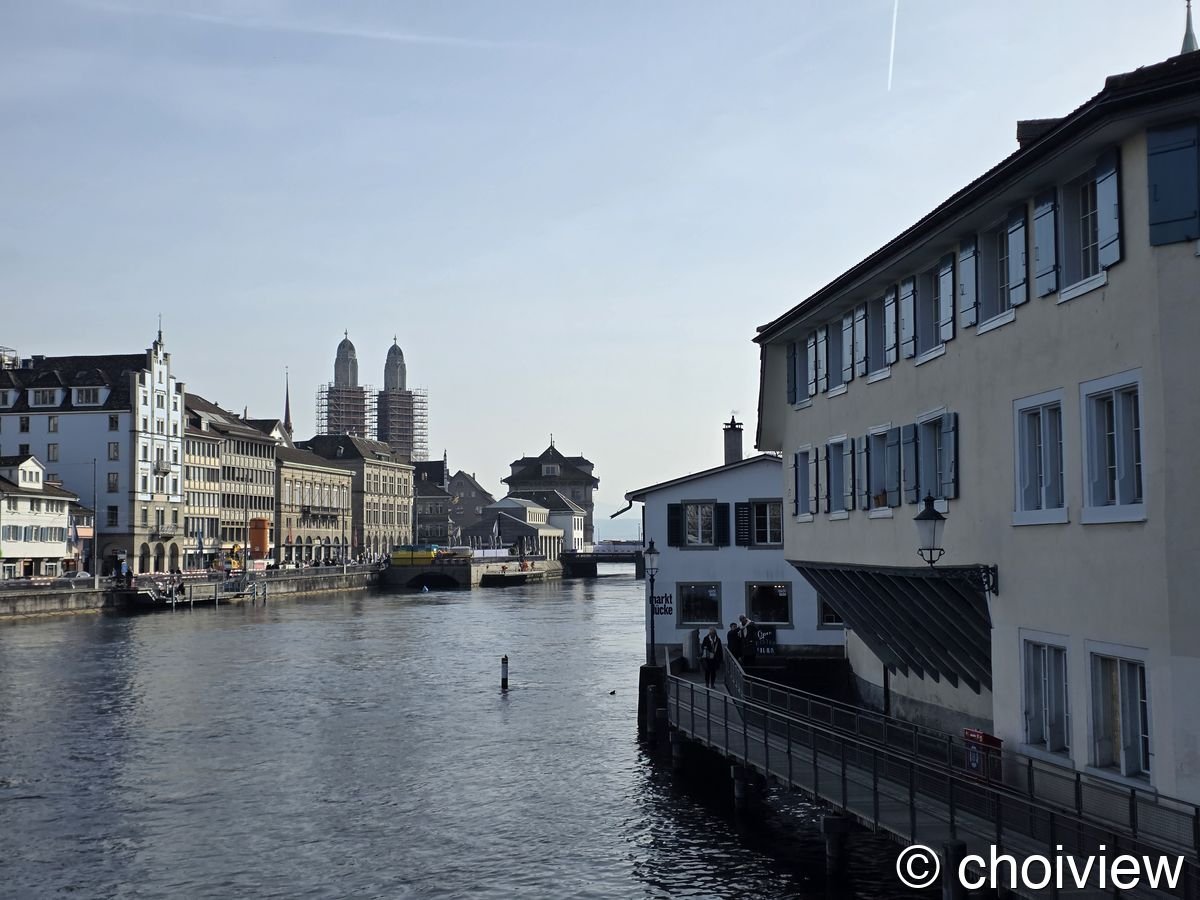
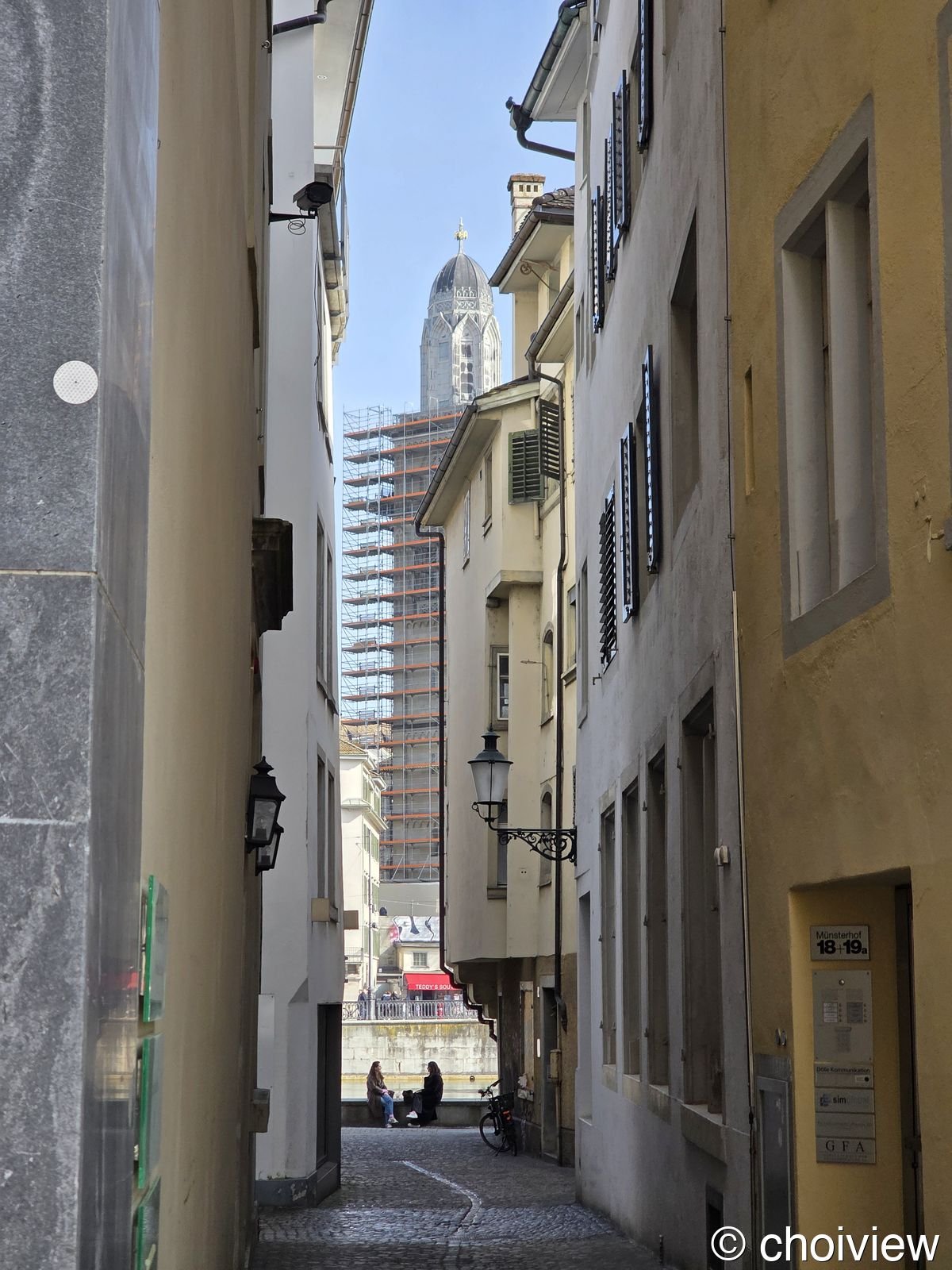
이어 니더도르프에 있는 그로스뮌스터 Grossmünster 대성당을 찾았지만, 두 개의 탑이 공사용 천으로 감겨 있는 등 대대적 보수 공사 중이었어요. 독일에서 본 대성당보다 규모도 작아 보여서 이번엔 패스하기로 했습니다.
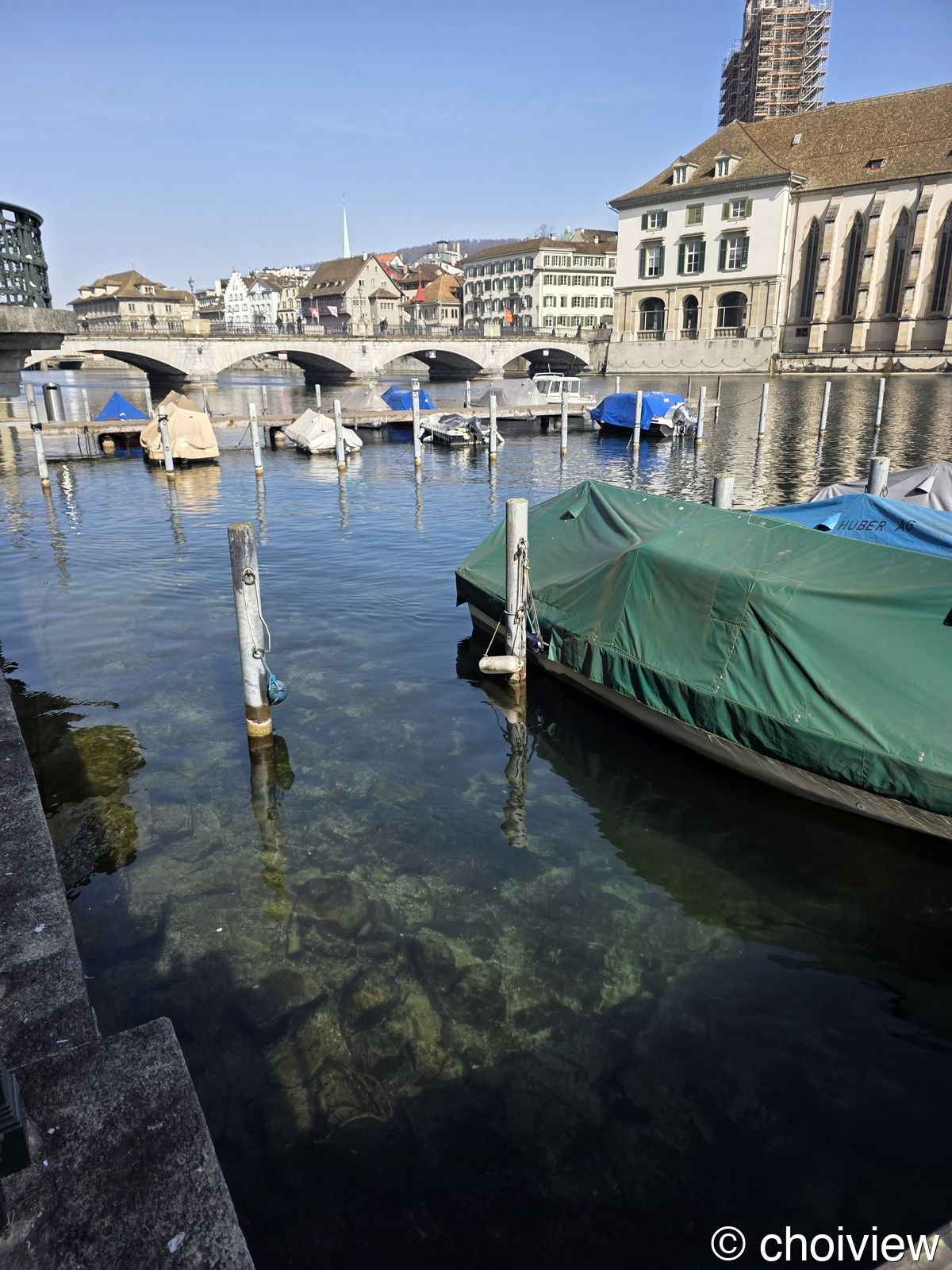
11시 반쯤, 스위스의 살인적인 물가 때문에 미리 독일 리들에서 사 온 부리또를 먹으러 괜찮은 장소를 물색했어요. 찾은 곳은 리마트 강 바로 앞 나무 데크. 현지인들이 햇볕 쬐며 도시락을 먹고 있었어요. 다들 이 물가에 밥을 싸 온 것이겠지요. 근처 시청에서도 도시락 든 스위스인들이 꽤 보여서, 그들조차 물가에 자유롭지 않아 보이더라고요.
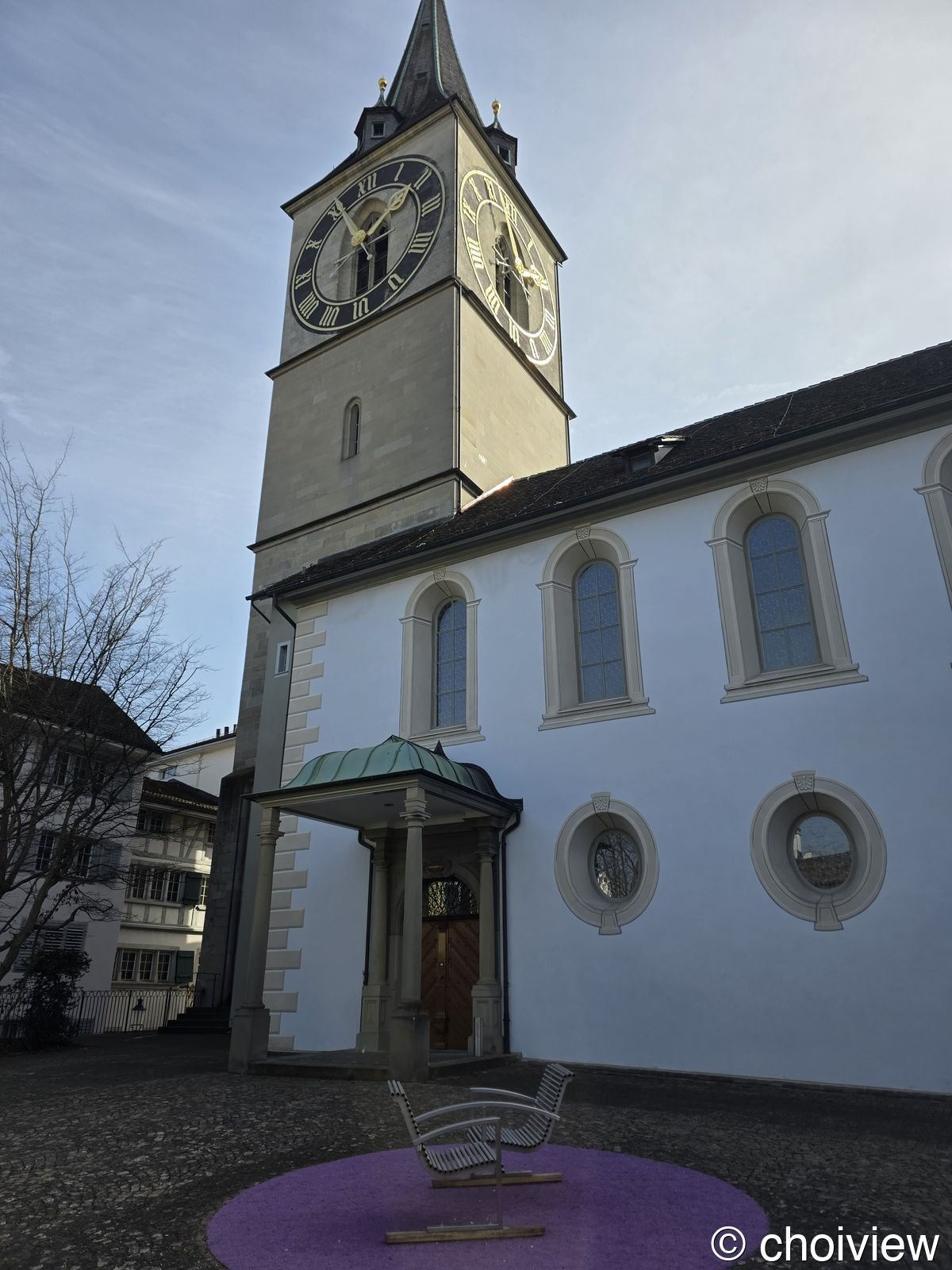
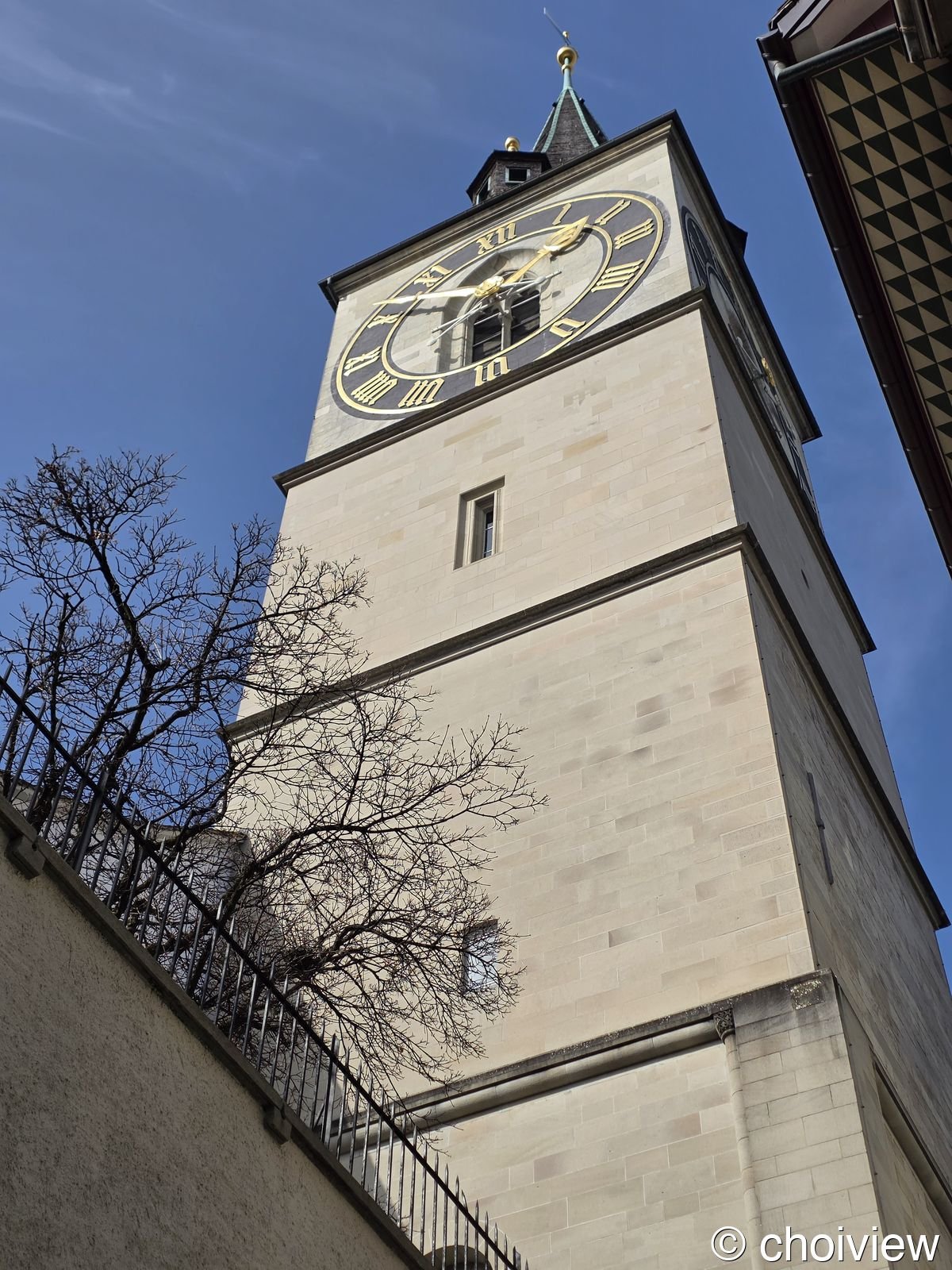
경제적으로 배부르게 점심을 먹고 린덴호프 Lindenhof로 올라갔어요. 가는 길에 성 베드로 교회 St. Peter Kirche에 들렀어요. 취리히에서 가장 큰 시계탑이 있는 곳인데, 중세 시대엔 개인 시계가 없어서 시민들이 교회나 시청 탑의 시계를 보고 시간을 알았다고 해요.
스위스가 시계 강국이 된 건 16~18세기 이후로, 프랑스에서 종교 박해를 피해 온 장인들이 제네바와 취리히에 정착하면서 정밀 시계 제작이 발전했다고 하더라고요. Rolex, Omega도 모두 스위스 브랜드예요. 특히 이곳 시계는 유럽에서 가장 큰 교회 시계판 중 하나로, 지름이 약 8.7m나 돼서 셔터를 연신 눌러댔습니다.
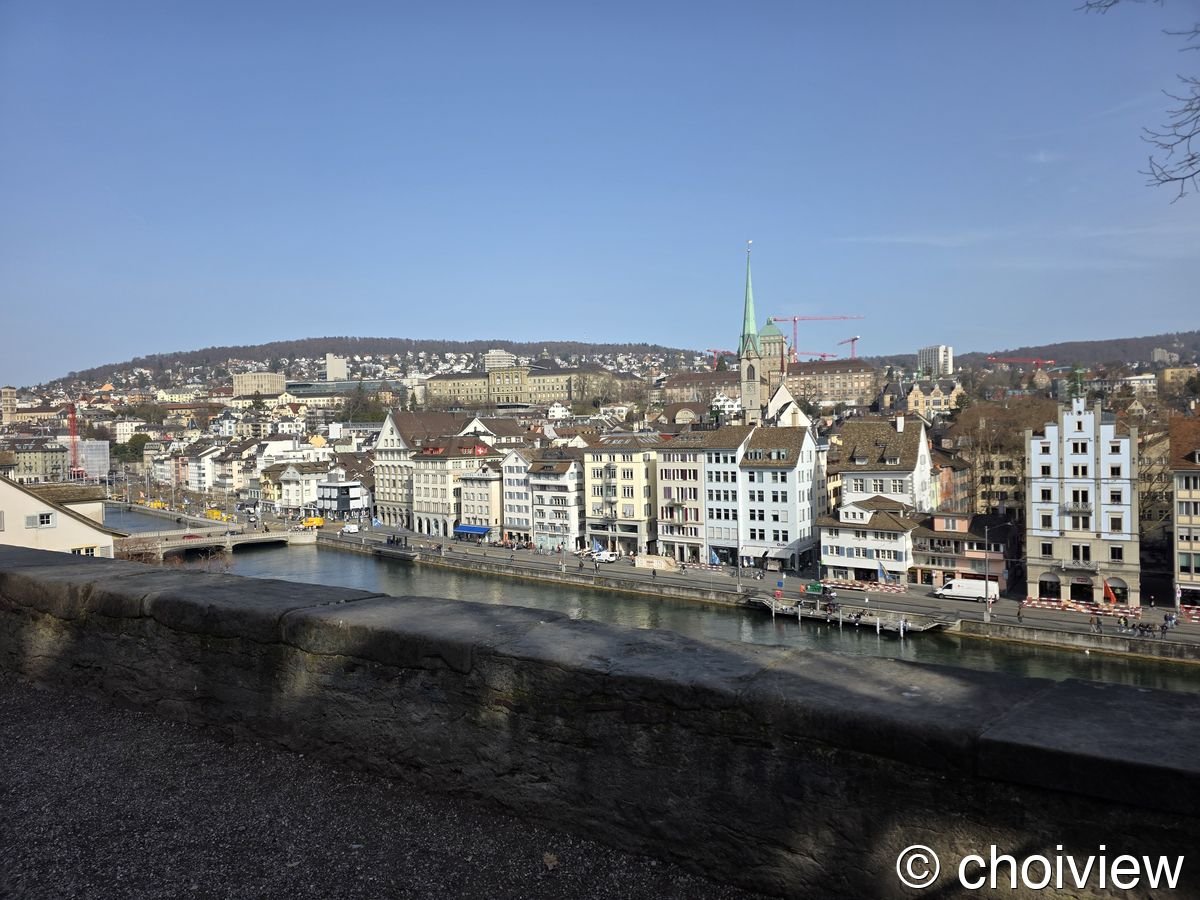
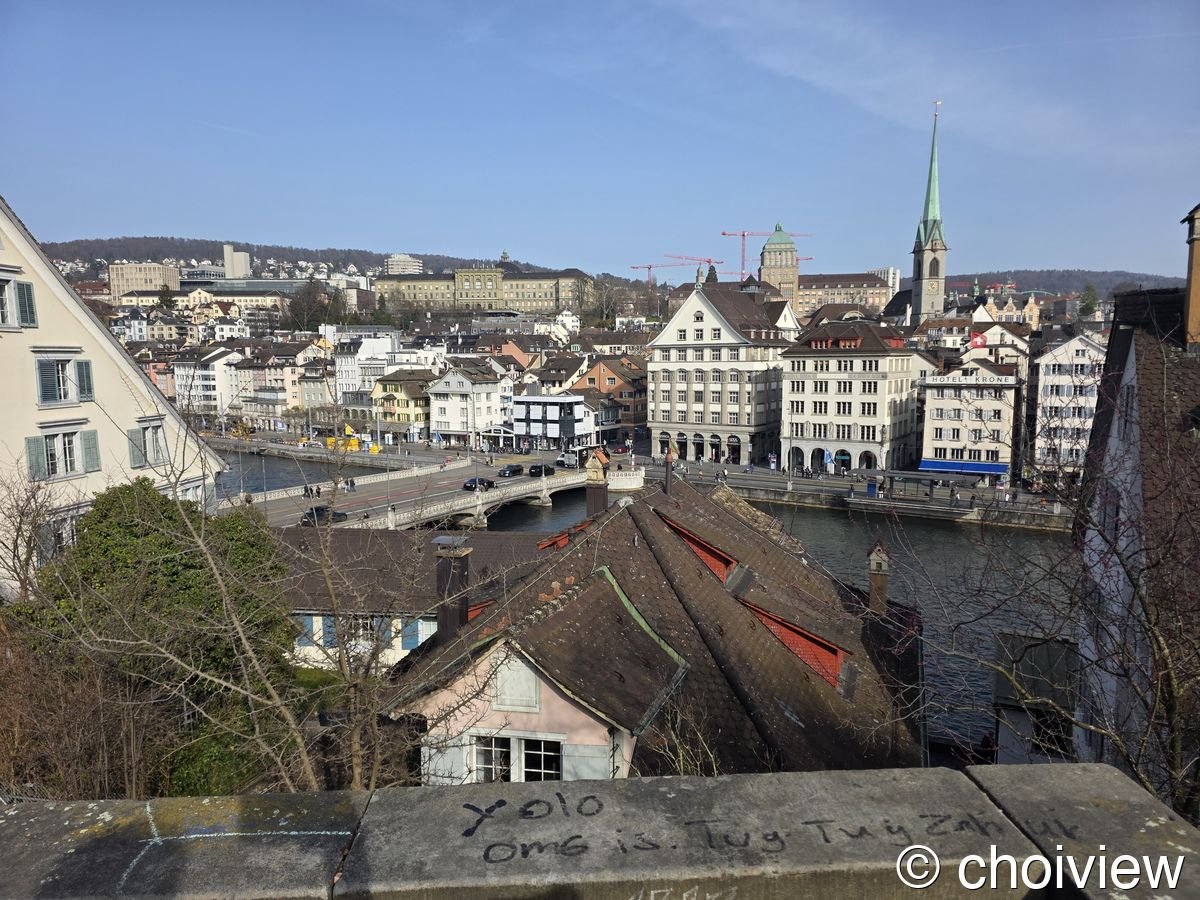
린덴호프는 구시가지 언덕 위, 옛 로마 시대 방위 요새 부지에 있는 작은 공원이에요. 가 보니 취리히 전경이 활짝 열려 있었어요. 현빈과 손예진의 사랑의 불시착 촬영지이기도 했고요. 인생 사진 한 장 건지려고 꽤 노력을 기울였는데, 몇 장 건진 것 같아 흡족한 마음으로 숙소를 향했습니다.
숙소는 높은 물가 때문에 공항 근처 클로텐까지 가야 했어요. 도심과 거리가 있어 한적했지만, 로컬 주민들이 지나는 동네에서 그들의 삶을 느낄 수 있어 좋았어요. 식당, 거실, 발코니를 다른 방 사람들과 함께 쓰는 아파트형 숙소였는데, 입구 쪽 방을 쓰는 다정한 이탈리아 아저씨를 만나 좋았어요.
미국에서 산 드라이기가 전압이 안 맞는지 계속 꺼지더니, 이날은 펑 소리와 함께 우리 방 쪽 라인의 전기가 몽땅 나가 버렸습니다. 그 이탈리아 아저씨에게 불이 나갔다고 하니 “오..” 하면서 두꺼비집을 찾아 고쳐줬고, 화장실 휴지가 없다고 하니 1층에서 가져다주기까지 했어요. 낯선 곳에서 만난 소소한 친절이 참 고맙더라고요.
내일은 역대급으로 일찍 나서야 하는 바쁜 날이어서, 독일에서 미리 사 놓은 라면 3개를 후루룩 먹고 9시쯤 잠을 청했습니다.
📍 오늘 만난 장소들
✏️ 끄적끄적 노트
스위스는 빅맥지수에서 세계 최상위권을 차지하며, 평균 외식 비용이 1인당 약 4~5만 원에 달해요. 높은 물가에도 불구하고 세계 최고 수준의 임금과 삶의 질을 유지하고 있어요.
✈️ 여행 팁
We rolled out of bed at five in the morning and hustled to catch the 6:15 AM FlixBus.
By the time we stepped outside it was already six. With just fifteen minutes to reach the stop, it was a scramble. We made it at 6:12—just in the nick of time. The ticket inspector was friendly and the luggage handler was genuinely warm. FlixBus has a reputation for running late, but that morning it pulled away at exactly 6:15. Someone came sprinting up at the last second, and they let him on too, so we were off.
Along the way, we got lucky. Tickets to see The Last Supper at the Santa Maria delle Grazie basilica suddenly became available. Because the centuries-old paint continues to flake away, only thirty-five visitors are admitted per day, and up until the previous evening every slot had been sold out. Then, out of nowhere, a single ticket appeared for the date three days from now. That’s the beauty of travel—bad days may come, but good fortune always follows.
The bus was surprisingly comfortable. There was a restroom with indicator lights showing whether it was occupied or empty, which was convenient. Wi-Fi was available too, though capped at 250 megabytes—enough for browsing, but not really for streaming.
The scene inside the bus was its own kind of entertainment: a daughter seated a few rows from her mother passing food and blowing kisses, a passenger deep in a video call, and most others knocked out cold, each sleeping in their own wonderfully unique position.
After winding through Austria, we reached Zurich in about four hours, arriving around 10:35. The delays we had worried about turned out to be minimal.
The moment you cross a border, the landscape transforms. Culture, language, religion—even within Europe, everything shifts. There was a noticeably more refined elegance in the air. People seemed absorbed in their own worlds, quietly enjoying their lives.
Stepping out of the station, we walked straight along the Limmat River, then strolled down Bahnhofstrasse, a bustling boulevard lined with restaurants and upscale boutiques, soaking in the atmosphere of Zurich.
Next, we sought out the Grossmünster cathedral in Niederdorf, but its twin towers were shrouded in scaffolding for extensive renovation. It felt smaller than the cathedrals we had seen in Germany, so we decided to give it a pass this time.
Around half past eleven, knowing Switzerland’s jaw-dropping prices all too well, we scouted a spot to enjoy burritos we had wisely picked up at a Lidl in Germany. We found the perfect place: a wooden deck right along the Limmat River, where locals were soaking up the sunshine with their own packed lunches. Even the Swiss office workers at the nearby city hall were brown-bagging it—a sure sign that even locals aren’t immune to the cost of living here.
After a budget-friendly lunch, we climbed up to Lindenhof. On the way, we stopped at St. Peter Kirche, home to Zurich’s largest clock tower. In medieval times, people relied on church and city hall clocks to tell time since personal timepieces simply didn’t exist.
Switzerland’s rise as a watchmaking powerhouse began in the sixteenth to eighteenth centuries, when persecuted artisans from France settled in Geneva and Zurich, bringing their craft with them. Rolex, Omega—they’re all Swiss. The clock face here is one of the largest in all of Europe, measuring about 8.7 meters across, and I found myself clicking the shutter again and again.
Lindenhof is a small hilltop park perched on the site of an ancient Roman fortification in the old town. The sweeping panorama of Zurich’s cityscape was breathtaking. It also happens to be a filming location for the Korean drama Crash Landing on You. I put quite a bit of effort into capturing the perfect shot, and left feeling rather pleased with what I got.
Our accommodation was out near Kloten, close to the airport, driven there by the punishing prices in the city center. It was a quiet residential neighborhood, and there was an unexpected charm in simply observing how the locals lived. The apartment-style lodging had a shared kitchen, living room, and balcony—and we were lucky to meet a kind-hearted Italian gentleman who occupied the room near the entrance.
Then came the drama: our American-bought hair dryer couldn’t handle the voltage difference and kept cutting out. That evening, it went out with a loud pop, and the entire electrical line on our side of the apartment went completely dark. When I told the Italian neighbor, he simply said “Oh..” with a grin, found the breaker box, and reset it for us. When I mentioned we were also out of toilet paper, he went downstairs and brought some up. Those small, spontaneous acts of kindness from a stranger in a foreign land—they truly meant the world.
With an early start looming the following morning, we slurped down three packs of instant ramen we had bought in Germany and turned in for the night around nine.